
White Gold vs. Yellow Gold vs. Rose Gold: Alloy Recipes, Rhodium Plating, and Resale
Does color affect gold purity or resale payouts? Examine the exact metallurgical recipes behind white, yellow, and rose gold, rhodium maintenance costs, and skin compatibility.
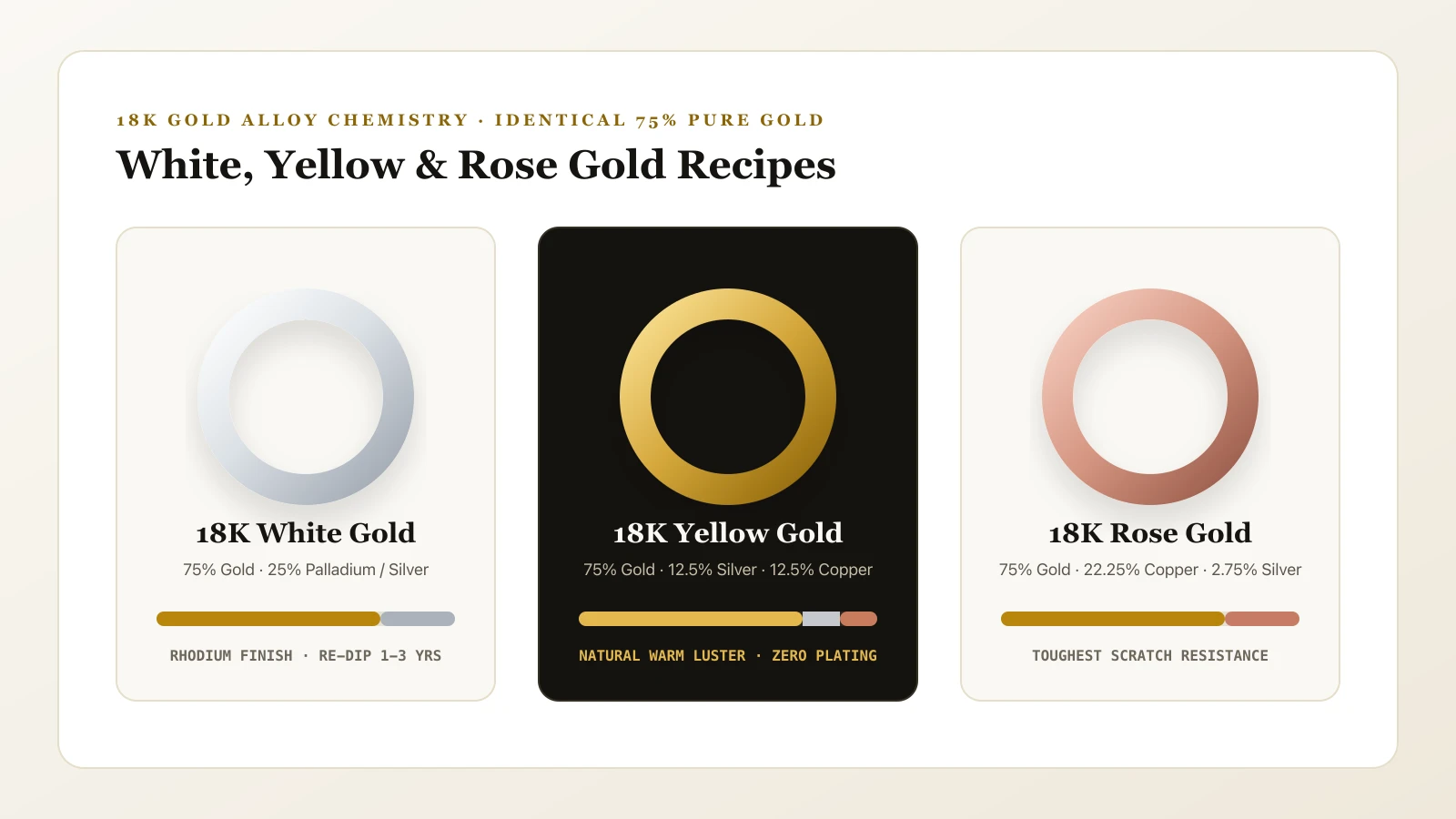
Same karat always means identical pure gold content
One of the longest-running myths at jewelry counters is that yellow gold is somehow 'more real' than white or rose gold. Metallurgically, that is completely untrue. Whether a ring is stamped 18K (750) white gold, 18K yellow gold, or 18K rose gold, exactly three-quarters of its weight is pure elemental gold.
What changes color is strictly the recipe of the remaining 25% (or 41.7% in 14K) alloy metals mixed into the molten crucible.
Inside white gold — and why it gradually turns warm
Pure gold is intensely yellow, so bleaching it into cool silvery white takes aggressive 'whitening' metals — historically nickel in North America, and increasingly hypoallergenic palladium or silver-manganese across Europe and high-end makers. Even with whitening metals, raw unplated white gold retains a faint warm champagne-grey cast.
To deliver the dazzling icy-white brilliance customers expect next to colorless diamonds, jewelers electroplate finished white gold with a thin layer of rhodium (a gleaming platinum-group metal). As rings brush against keys, ceramic mugs, and steering wheels over 18 to 36 months, that rhodium topcoat gradually wears thin along the bottom shank — easily restored in 20 minutes by any bench jeweler for roughly $50–$120.
| Gold Color (18K) | Typical 25% Alloy Mix | Needs Re-Plating? | Allergy Risk | Resale Melt Value |
|---|---|---|---|---|
| 18K Yellow Gold | 12.5% Silver + 12.5% Copper | No (Never) | Very Low | Identical (75% Au) |
| 18K White Gold | Palladium, Silver, or Nickel + Rhodium | Yes (Every 1–3 yrs) | Low (Palladium) / Mod (Nickel) | Identical (75% Au) |
| 18K Rose Gold | 22.25% Copper + 2.75% Silver | No (Never) | Low (Watch copper sensitivity) | Identical (75% Au) |
Rose gold: copper strength with zero re-plating
Rose gold owes its romantic warm blush to copper. A classic 18K rose gold mix combines 75% pure gold, 22.25% copper, and 2.75% silver; 14K rose gold leans even heavier on copper, giving it an even pinker copper hue and remarkable dent resistance.
Unlike white gold, rose gold never relies on outer plating — its warm tone runs solid all the way through and actually deepens subtly into a vintage patina over decades. The only caveat: a small minority of wearers with strong copper sensitivity may notice faint skin darkening on humid days.
Yellow gold: lowest maintenance & easiest heirloom matching
Classic yellow gold balances pure gold with roughly equal shares of silver and copper, preserving gold's unmistakable historic warmth without needing rhodium re-dipping. It is also the only color realistically available in high-purity 21K and 22K designs, because 8.33% alloy in 22K is far too little to turn deep yellow gold white or pink.
Resale value: does color change your payout?
At any scrap dealer, gold buyer, or bullion refiner, color carries zero price penalty or bonus: a 10-gram 18K white gold band, a 10-gram 18K yellow gold band, and a 10-gram 18K rose gold band all contain 7.50 grams of pure gold and receive the identical melt valuation. Only in second-hand estate boutiques does current fashion demand nudge resale pricing slightly.
Worked Real-World Math
10-Year Ownership Cost: 18K White Gold vs. 18K Yellow Gold Ring
Two identical 6-gram 18K wedding bands cost $1,200 each up front.
- 1.18K Yellow Gold: $1,200 initial cost + $0 mandatory plating upkeep over 10 years = $1,200 total.
- 2.18K White Gold: $1,200 initial cost + 4 rhodium re-dips over 10 years (~$85 each = $340) = $1,540 total.
- 3.Both rings hold the exact same 4.50 grams of pure gold at resale.
Bottom line: Factor modest rhodium maintenance into white gold rings — or consider unplated palladium white gold or 950 platinum if you want zero re-dipping.
Before You Act
Smart Questions to Ask Before Buying Colored Gold
- If buying white gold with sensitive skin, ask specifically for 'nickel-free palladium white gold'.
- Ask whether the jeweler includes complimentary rhodium re-plating under your purchase warranty.
- For high-purity 22K heritage sets, expect natural warm yellow gold — true 22K white gold does not exist.
- Always check the karat stamp (585 or 750) rather than judging value by color alone.
Put This Into Practice
Check live value for any karat in our Gold Price Calculator
Quick Answers
Frequently Asked Questions
Is white gold cheaper than platinum?
White gold usually costs less up front than 950 platinum because gold alloys are less dense (so an identical ring weighs fewer grams) and easier to cast and polish, though platinum never needs rhodium re-plating.
Can 22K gold be made into white gold?
No. At 91.67% pure yellow gold, the remaining 8.33% alloy cannot mask gold's deep yellow color, so white gold is almost exclusively crafted in 18K, 14K, or 9K.
Does rose gold fade over time?
Solid rose gold never peels or fades to a different base metal; over years of wear, the copper develops a slightly warmer, deeper vintage rosy patina that many collectors prize.
Why does unplated white gold look slightly yellow?
Because 58.3% to 75% of the metal is naturally yellow gold! Once the microscopic white rhodium surface coating wears thin, the warm off-white base alloy subtly shows through until re-dipped.
About the Author
Daniel Hargrave — Senior Precious Metals Analyst & Managing Editor
Twelve years covering physical bullion markets, retail jewelry hallmarking standards, and retail spread analysis across London, Dubai, Mumbai, and New York.
Read our editorial & fact-checking standards →